.svg)
Sleep Study Information
Learn what sleep studies involve, why they’re important, and how our home‑based and in‑lab testing options can help diagnose sleep apnoea accurately. This page explains what to expect, the differences between each study type, and how we ensure high‑quality, reliable results to guide your care.
Why is a sleep study needed?
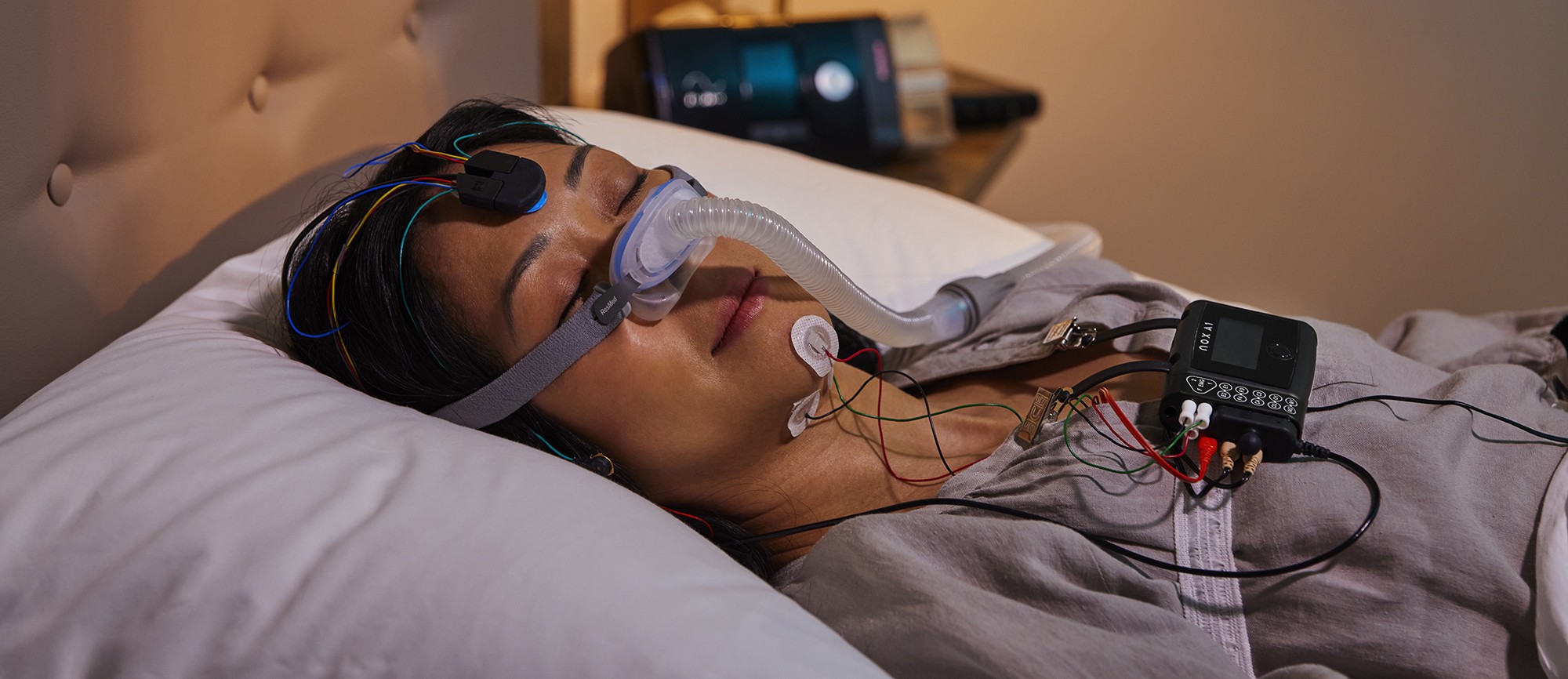

Sleep studies help your clinician understand what happens to your breathing and sleep while you’re asleep—something you can’t observe yourself.
Many people don’t realise how often their breathing pauses or how disrupted their sleep actually is. A sleep study provides a clear picture of your oxygen levels, snoring, breathing patterns, and sleep quality.
This information is important because it confirms whether you have sleep apnoea, how severe it is, and which treatment will work best for you.
With accurate results, your care can be tailored to your needs, helping you sleep better and stay healthier long‑term.
What is the difference between a Home-Based and In-Hospital Sleep Study?
At CRS, we offer both Home‑Based and In‑Hospital Sleep Studies to ensure every patient receives the most accurate and appropriate assessment for their needs. Both options use high‑quality equipment and expert support to provide reliable results and guide effective treatment.
Home-Based Sleep Study (HBSS)
Best for: People with straightforward symptoms and no major medical conditions.
- Done in the comfort of your own home.
- Uses sensors to check your breathing, heart rate, oxygen levels, leg movements, and basic brain activity during sleep.
- Available as technician‑applied (we put the equipment on for you) or patient‑applied (you put it on yourself).
- Technician‑applied is recommended, as it provides the best setup and most reliable results.
In-Hospital Sleep Study (ILSS)
Best for: People with complex symptoms or medical needs.
- Done overnight in a sleep clinic.
- Includes all the same monitoring as a home study, plus extra features for accuracy.
- A trained sleep technologist watches the signals in real time to make sure everything is recording properly.
- Ability to identify unusual movements, behaviours, or events that might not show up on the equipment.
Why choose a HBSS?
- Comfortable and familiar environment.
- Easier for people who prefer to sleep at home.
- Provides enough information for many patients with typical symptoms of sleep apnoea.
Why choose a ILSS?
- Ideal for people with complex medical, neurological, psychiatric, or cardiac conditions.
- Provides the highest level of accuracy and detail.
- Best option when a home study isn’t suitable or if previous results were unclear.
Your Sleep Study Journey at CRS
.jpg)
Is CPAP the only treatment option for sleep apnoea?
Many people believe CPAP is the only treatment for sleep apnoea, but that’s not the case. At CRS, we offer a range of personalised options—including CPAP, Mandibular Advancement Splints, positional therapy, and behavioural treatments like CBTi—so your care is tailored to what suits you best. Our team works with you to find the most comfortable and effective solution for your individual needs.
.jpg)

Preparing for your Home-Based Sleep Study

Please have a shower prior to your set-up.
Ensure you have clean hair and skin. Do not apply moisturisers, make-up or oils to the skin.
Facial hair must be cleanly shaven, especially around the cheeks as stubble prevents proper lead attachment. A full-length beard may be acceptable however you may be asked to shave if deemed necessary (full length beards are best suited to technician applied set-ups).
Please remove nail polish or acrylic/artificial nails from either your ring or middle finger to allow placement of the oxygen monitoring probe.
For technician applied appointments appropriate loose clothing or sleepwear is required – please come dressed in pyjamas or a modest top with shorts/pants. For males who prefer to sleep without a shirt, sensors can be applied directly to the chest; however, please be aware there is a risk of skin irritation.
Preparing for your In-Hospital Sleep Study

Please have a shower prior to arrival.
Ensure you have clean hair and skin. Do not apply moisturisers, make-up or oils to the skin.
Facial hair must be cleanly shaven, especially around the chin and jaw line as stubble prevents proper lead attachment. A full-length beard may be acceptable however you may be asked to shave if deemed necessary.
Please remove nail polish or acrylic/artificial nails from either your ring or middle finger to allow placement of the oxygen monitoring probe.
Appropriate loose clothing or sleepwear is required – please come dressed in pyjamas or a modest top with shorts/pants. For males who prefer to sleep without a shirt, sensors can be applied directly to the chest; however, please be aware there is a risk of skin irritation.
When you arrive, a brief respiratory test (spirometry) will also be performed to assess lung function. In preparation for this test please avoid strenuous exercise for 1 hour prior to the test. Certain respiratory medications may need to be withheld. These will be advised by our staff when scheduling your appointment.

Need more information?
If you have further questions about our sleep studies, contact our friendly team.